
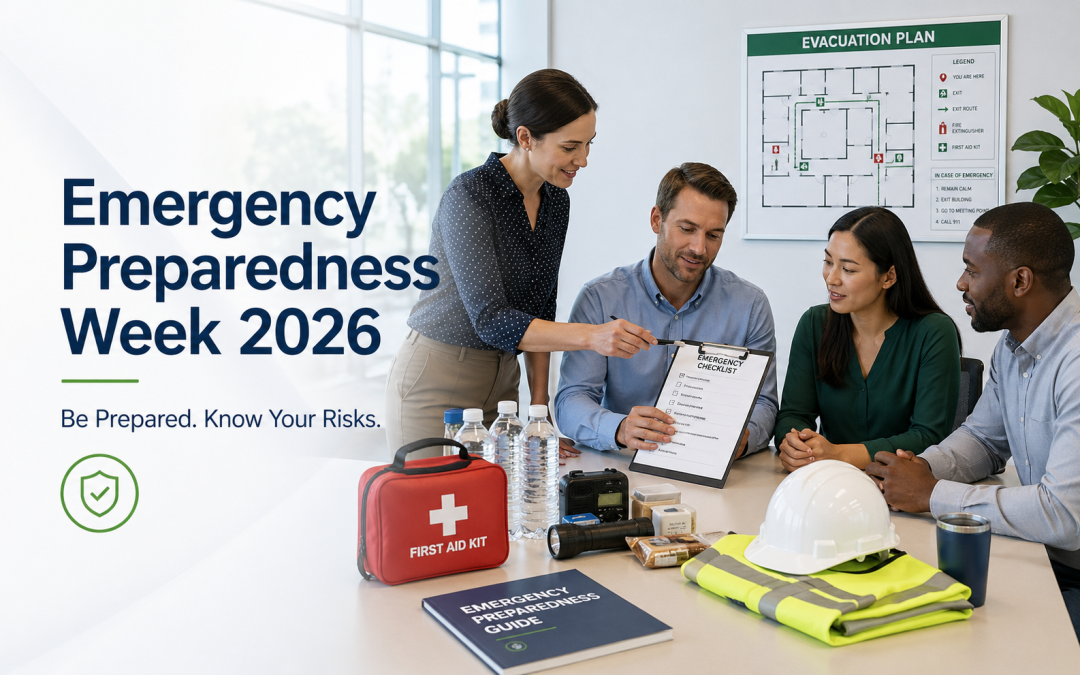
Emergency Preparedness Week 2026: Be Prepared. Know Your Risks.
Why Emergency Preparedness Matters in the Workplace
A strong workplace emergency plan helps your team respond quickly, safely, and confidently when something unexpected happens. Whether your organization is an office, warehouse, school, construction site, retail store, industrial facility, or community workplace, preparedness can reduce confusion, support faster decision-making, and help protect people during an emergency. WorkSafeBC notes that employers are responsible for planning and preparing for emergencies that could affect worker health and safety, including situations where workers may need to evacuate or be rescued. This makes Emergency Preparedness Week a great time for B.C. employers, supervisors, health and safety committees, and first aid attendants to review their plans and update their supplies.Know Your Risks in British Columbia
The theme “Be Prepared. Know Your Risks.” is especially relevant in British Columbia because workplace risks can vary widely by region and industry. A business in Richmond or Vancouver may prioritize earthquake preparedness, power outages, coastal flooding, and severe weather. A workplace in the Interior may need to focus more heavily on wildfire smoke, evacuation readiness, heat events, and transportation disruptions.
Start by asking:
Does our workplace have an up-to-date emergency response plan?
Do employees know evacuation routes and meeting areas?
Are first aid kits, AEDs, oxygen equipment, and emergency supplies accessible and inspected?
Do workers know what to do during an earthquake, fire, flood, medical emergency, or power outage?
Do we have a communication plan if phones, internet, or power are disrupted?
These simple questions can reveal gaps before an emergency happens.
Workplace Preparedness Checklist for EP Week 2026
Emergency Preparedness Week is a practical opportunity to take action. Your workplace can use May 3–9, 2026, to complete a few important safety tasks: Review your workplace emergency response plan and make sure it reflects your current staff, layout, operations, and risks. Check first aid supplies, AEDs, oxygen equipment, emergency kits, flashlights, batteries, radios, food, water, and personal protective equipment. Confirm evacuation routes, muster points, emergency contacts, and procedures for workers who may need assistance. Schedule or refresh employee training, including basic first aid, intermediate first aid, CPR, AED overview, emergency response training, and Joint OHS Committee education. Run a short workplace drill or tabletop exercise so employees can practice what to do before a real emergency occurs. WorkSafeBC also provides workplace emergency evacuation planning resources to help employers develop effective procedures for evacuation.First Aid and Emergency Supplies Are Part of Preparedness
A workplace emergency plan is only effective when people have the right tools, training, and supplies available. In British Columbia, employers must complete a written first aid assessment to determine the first aid equipment, supplies, facilities, and attendants required for each workplace. For many organizations, EP Week is a good time to review:- workplace first aid kits
- trauma supplies
- AED placement and visibility
- oxygen equipment and certification needs
- emergency response bags
- 72-hour emergency supplies
- vehicle emergency kits
- spill, evacuation, and communication supplies
- staff first aid training records