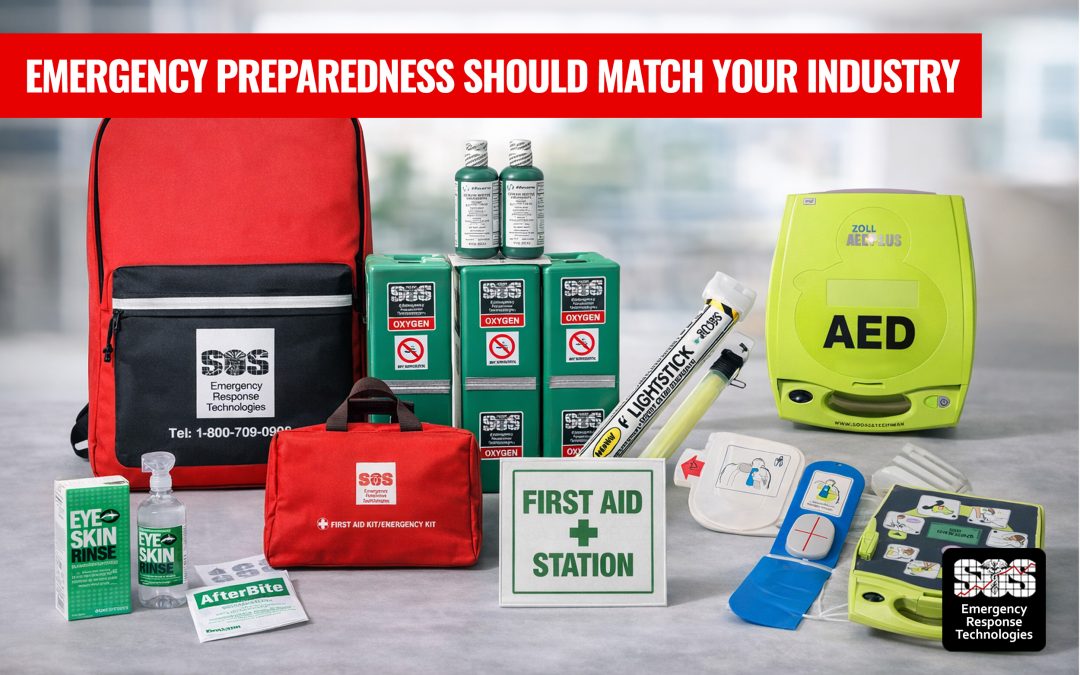
Emergency Preparedness Should Match Your Industry
That difference shows up in simple ways. Some workplaces need fast access to supplies in one fixed location, while others need portable gear that can move with crews. Some environments are mostly concerned with common medical issues and orderly evacuation, while others need to think about machinery, weather, public interaction, or delayed access to help.
When preparedness is matched to the job, it becomes easier to use, easier to maintain, and much more likely to help in the moment it is needed.
1. Office workplaces
That difference shows up in simple ways. Some workplaces need fast access to supplies in one fixed location, while others need portable gear that can move with crews. Some environments are mostly concerned with common medical issues and orderly evacuation, while others need to think about machinery, weather, public interaction, or delayed access to help.
When preparedness is matched to the job, it becomes easier to use, easier to maintain, and much more likely to help in the moment it is needed.
2. Warehouse operations
Warehouses tend to have a different rhythm. People are moving, lifting, receiving shipments, operating equipment, and working across larger floor areas. That means preparedness has to account for distance, pace, and a wider range of physical hazards such as cuts, strains, trips, forklift traffic, and spill-related risks.
In a warehouse, response time matters because an incident may happen far from a main office or break room. Supplies need to be visible and practical, not just technically present. It also helps to think in terms of access points: where workers spend time, where equipment is used, and where a fast first response is most likely to be needed.
When warehouse preparedness is planned properly, businesses often see faster access to supplies, smoother incident handling across large spaces, and stronger day-to-day readiness in active work areas.
3. Construction sites
Construction sites change constantly, which is exactly why they need a different approach. Crews may be working outdoors, moving between zones, dealing with tools and heavy equipment, or adjusting to new site conditions from one week to the next. A setup that made sense at the start of a project may not be enough once the site evolves.
Because the environment is less predictable, construction preparedness needs to be flexible. Portable supplies, clear communication, and planning that reflects changing access routes and work areas are often more important than relying on one fixed station. Weather can also shape what crews need, especially when heat, cold, rain, or reduced visibility become part of the workday.
The advantage of a site-specific approach is that crews have support that actually follows the work. That can mean quicker help in changing zones, more realistic readiness for higher-risk tasks, and better confidence for teams working outside or at distance.
4. Retail stores
Retail has its own set of pressures because employees are balancing safety, customer service, and store operations at the same time. Incidents may involve staff, customers, or both, and they often happen in a public setting where the response needs to be calm and organized. Slips, minor injuries, customer medical issues, and building evacuations are all realistic concerns.
In this setting, preparedness should not be complicated. Staff may not have time to interpret a long procedure in the middle of a busy shift, so the best systems are usually the ones that are easy to recognize and easy to act on. Simple placement of supplies, clear internal roles, and straightforward response steps can go a long way.
For retail teams, the payoff is often a more confident response during customer incidents, less disruption during smaller emergencies, and a more professional experience when staff need to manage a situation in public.
The advantage of a site-specific approach is that crews have support that actually follows the work. That can mean quicker help in changing zones, more realistic readiness for higher-risk tasks, and better confidence for teams working outside or at distance.
5. Schools and education settings
Schools carry a broader duty of care because they are responsible for students, staff, and visitors throughout the day. The environment is more complex than it first appears: classrooms, hallways, common spaces, offices, playgrounds, and activity areas all create different response needs, and student movement changes those needs throughout the day.
Preparedness in schools has to support both routine and higher-stress situations. That includes common injuries, allergies, and illness, but also lockdown procedures, evacuation planning, and communication across different parts of the campus. Placement matters here because a supply that is technically available is not especially useful if staff cannot reach it quickly when supervising students.
A thoughtful setup can help schools respond more consistently, support staff across multiple areas, and create greater peace of mind for the broader school community.
For retail teams, the payoff is often a more confident response during customer incidents, less disruption during smaller emergencies, and a more professional experience when staff need to manage a situation in public.
The advantage of a site-specific approach is that crews have support that actually follows the work. That can mean quicker help in changing zones, more realistic readiness for higher-risk tasks, and better confidence for teams working outside or at distance.
6. Fleet and mobile teams
Fleet operations are different because the workplace is not always a building. Drivers, field technicians, delivery teams, and other mobile workers may be on the road for most of the day, which means they cannot rely on fast access to a central supply room or immediate help from nearby coworkers.
That makes self-sufficiency especially important. Vehicle kits, visibility tools, communication support, and seasonal emergency items all play a larger role when teams are traveling between locations or working alone. The first few minutes after a roadside incident or vehicle breakdown can be the most important, so preparedness needs to travel with the worker rather than stay back at the office.
When fleet readiness is taken seriously, businesses gain more consistent protection across vehicles, better support for offsite staff, and a stronger response capability in isolated or roadside situations.
A thoughtful setup can help schools respond more consistently, support staff across multiple areas, and create greater peace of mind for the broader school community.
For retail teams, the payoff is often a more confident response during customer incidents, less disruption during smaller emergencies, and a more professional experience when staff need to manage a situation in public.
The advantage of a site-specific approach is that crews have support that actually follows the work. That can mean quicker help in changing zones, more realistic readiness for higher-risk tasks, and better confidence for teams working outside or at distance.
7. Preparedness works better when it fits the job
The strongest emergency plans are usually the ones that reflect real conditions instead of generic assumptions. When employers look at how people move through the space, what hazards are most likely, and how quickly help can be reached, preparedness becomes much more practical.
For workplaces across Vancouver, Richmond, and the Lower Mainland, it is worth reviewing whether current first aid supplies and emergency products truly match the environment. A tailored setup is often easier to maintain and more meaningful for the people expected to use it.
When fleet readiness is taken seriously, businesses gain more consistent protection across vehicles, better support for offsite staff, and a stronger response capability in isolated or roadside situations.
A thoughtful setup can help schools respond more consistently, support staff across multiple areas, and create greater peace of mind for the broader school community.
For retail teams, the payoff is often a more confident response during customer incidents, less disruption during smaller emergencies, and a more professional experience when staff need to manage a situation in public.
The advantage of a site-specific approach is that crews have support that actually follows the work. That can mean quicker help in changing zones, more realistic readiness for higher-risk tasks, and better confidence for teams working outside or at distance.