
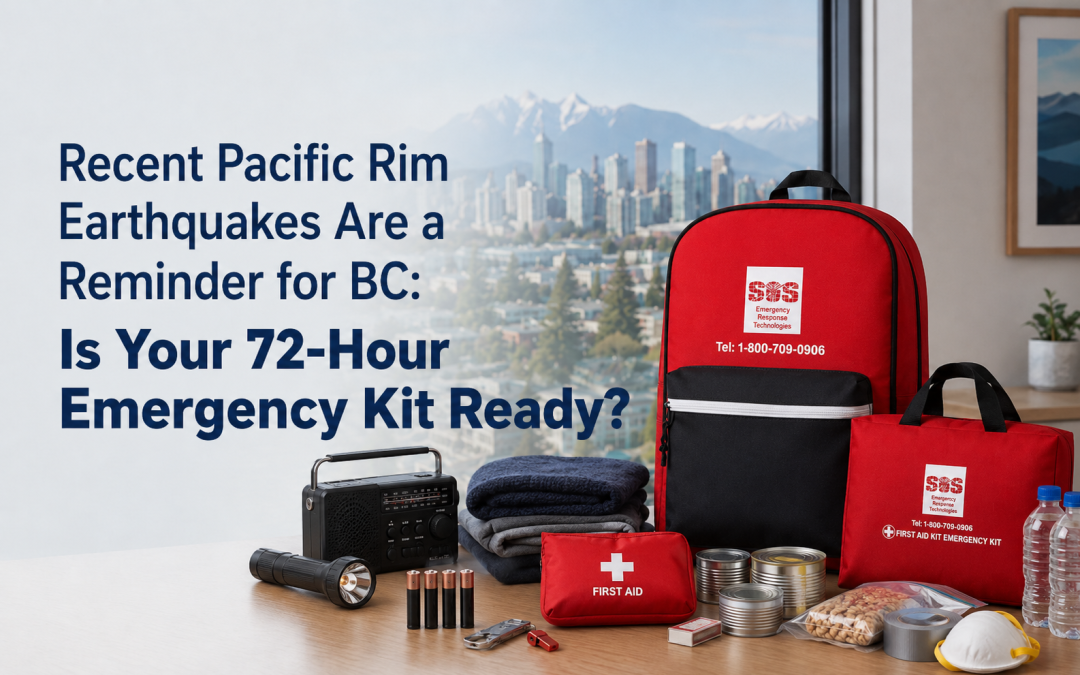
Recent Pacific Rim Earthquakes: Why BC Needs a 72-Hour Emergency Kit
Recent earthquakes around the Pacific Rim have brought earthquake preparedness back into focus for families, businesses, schools, and workplaces across British Columbia. While earthquakes cannot be predicted, the risk in BC is real, especially for communities in Vancouver, Richmond, Delta, Burnaby, Surrey, Coquitlam, North Vancouver, and the wider Lower Mainland. For many people, earthquake preparedness is something they plan to do later. But recent activity across seismically active regions such as Japan, the Philippines, and the west coast of North America is a reminder that emergencies do not wait for us to be ready. BC sits near the Cascadia Subduction Zone, one of the major earthquake concerns for the Pacific Northwest. A major earthquake could damage buildings, disrupt transportation, knock out power, affect water service, and make it difficult for emergency crews to reach every neighbourhood quickly. That is why having a 72-hour emergency kit is one of the most practical steps you can take right now.Why Earthquake Preparedness Matters in Vancouver and the Lower Mainland
Vancouver and the Lower Mainland are beautiful places to live, but they are also located in an active seismic region. A major earthquake could affect older buildings, bridges, roads, utilities, and low-lying areas. Neighbourhoods with older infrastructure or softer soil may face added challenges during a significant earthquake.
Areas such as Richmond and Delta are often discussed in earthquake preparedness because soft, sediment-heavy ground can increase the risk of liquefaction. This means the ground can behave more like a liquid during intense shaking, which can damage buildings, roads, and underground services.
The biggest issue after a major earthquake may not only be the shaking itself. It may be what happens afterward. Power outages, closed roads, damaged bridges, limited phone service, and water interruptions can make the first few days difficult. Emergency responders will be working hard, but during a large regional disaster, they may not be able to reach everyone right away. That is why residents and businesses are encouraged to be prepared to take care of themselves for at least 72 hours.
What Is a 72-Hour Emergency Kit?
A 72-hour emergency kit is a collection of essential supplies designed to help you and your household get through the first three days after an emergency. These kits are useful for earthquakes, storms, floods, power outages, wildfires, and other disasters that can interrupt daily life.
A good emergency kit should include:
- Drinking water
- Non-perishable food
- First aid supplies
- Flashlight
- Battery-powered or hand-crank radio
- Extra batteries
- Phone charger or power bank
- Emergency blanket
- Whistle
- Dust mask
- Basic hygiene supplies
- Important documents
- Cash in small bills
- Medications and personal medical items
- Supplies for children, seniors, or pets if needed
The goal is simple: if stores are closed, roads are blocked, power is out, or water is limited, your household still has the basic supplies needed to stay safe.
Why SOS Emergency 72-Hour Kits Are a Smart Choice for BC
Building a kit from scratch can feel overwhelming. Many people start with good intentions but never finish because they are unsure what to buy, where to store it, or how much they really need.
SOS Emergency 72-hour kits make preparedness easier for homes, offices, vehicles, schools, and businesses across BC and the Lower Mainland. Instead of waiting until an emergency happens, you can have essential supplies organized and ready ahead of time.
For families, a 72-hour kit provides peace of mind. For businesses, it supports workplace safety and emergency planning. For property managers, schools, and organizations, emergency kits help show that preparedness is being taken seriously.
A prepared kit is not just a box of supplies. It is a plan in action.
Earthquake Preparedness for Businesses in BC
Businesses in Vancouver and the Lower Mainland should also take earthquake readiness seriously. A major earthquake could affect staff, customers, deliveries, communications, and access to the workplace.
Business owners should consider:
- Keeping 72-hour emergency kits on site
- Having first aid supplies available
- Creating an emergency communication plan
- Training staff on evacuation and shelter-in-place procedures
- Securing shelves, equipment, and heavy furniture
- Keeping flashlights, radios, and backup power options available
- Reviewing emergency plans at least once a year
Prepared businesses are better positioned to protect employees, reduce panic, and restart operations after a disruption.
Do Not Wait for the “Big One”
The phrase “The Big One” is often used when talking about a major earthquake in BC. But preparedness should not only be about one major future event. Smaller earthquakes, storms, flooding, and power outages can also disrupt daily life.
Recent earthquakes around the Pacific Rim are a clear reminder that seismic activity is part of life in this region of the world. We cannot control when the ground shakes, but we can control how prepared we are before it happens.
Having a 72-hour emergency kit is one of the easiest and most responsible ways to prepare.
The Government of BC also has a wealth of resources and knowledge available online at: https://www2.gov.bc.ca
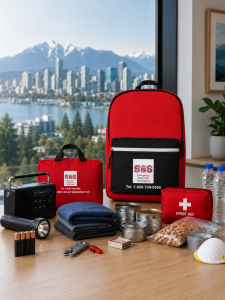 Get Prepared with SOS Emergency Response Technologies
Whether you live in Vancouver, Richmond, Burnaby, Surrey, Delta, Coquitlam, North Vancouver, Langley, New Westminster, or anywhere in the Lower Mainland, now is the time to review your emergency supplies.
SOS Emergency 72-hour kits are designed to help BC residents and businesses prepare before disaster strikes. Do not wait until stores are crowded, roads are blocked, or supplies are unavailable.
Prepare now. Protect your people. Give yourself the best chance to stay safe during the first critical days after an emergency.
For 72-hour emergency kits, workplace preparedness supplies, and safety solutions in BC and the Lower Mainland, contact SOS Emergency today.