
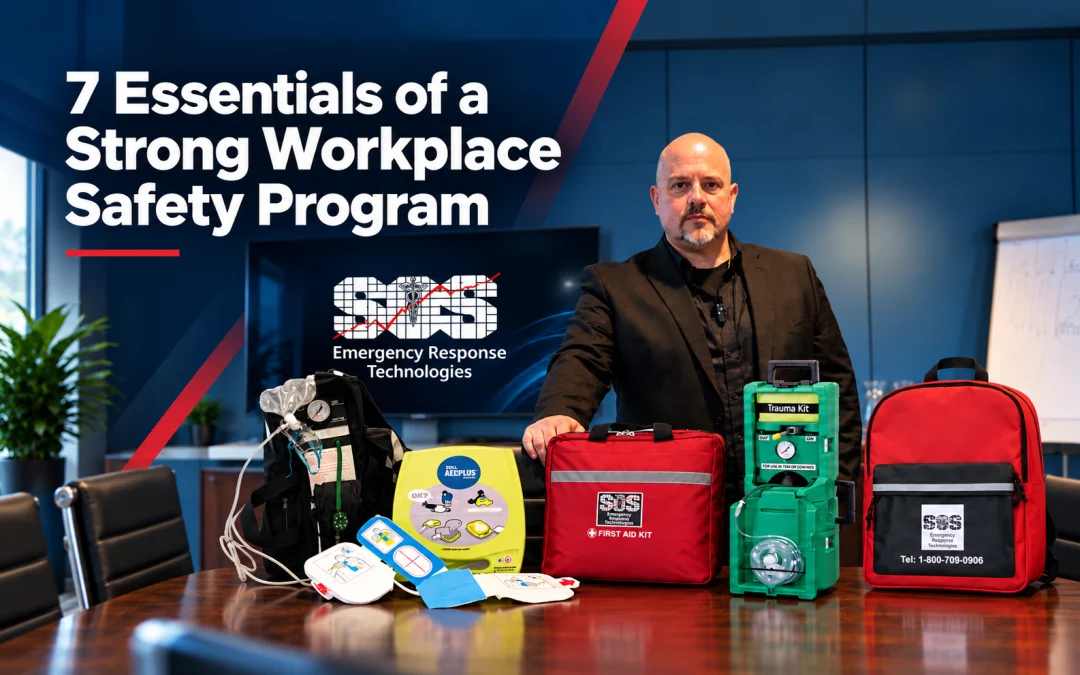
7 Essentials of a Strong Workplace Health & Safety Program
A strong workplace health & safety program is about more than having a first aid kit on the wall. It involves identifying hazards, training employees, maintaining emergency equipment and preparing for unexpected situations.
Whether you operate an office, retail store, warehouse, construction site or industrial facility, workplace safety should be an ongoing priority.
At SOS Emergency Response Technologies, we help businesses across British Columbia, Alberta and Western Canada strengthen their workplace safety and emergency preparedness programs.
Here are seven essential areas every business should review.
1. Establish a Safety Policy
A workplace health & safety program policy outlines your organization’s commitment to protecting employees and preventing workplace injuries.
Your policy should clearly define safety responsibilities, communicate expectations and reflect applicable occupational health and safety regulations.
It should also be reviewed when operations, workplace hazards or regulatory requirements change.
Remember: A safety policy is only effective when employees understand it and management puts it into practice.
2. Identify Workplace Hazards
Every workplace has different risks. Regular hazard assessments help businesses recognize potential dangers and implement appropriate safety measures.
Common workplace hazards include:
- Physical and ergonomic hazards
- Machinery and equipment risks
- Chemical exposure
- Workplace violence and harassment
- Working at heights
- Psychological health and stressors
- Fires, earthquakes and severe weather
Workplace inspections, employee feedback and regular hazard assessments can help identify safety concerns before incidents occur.
Safety tip: Review your hazard assessments whenever workplace conditions, equipment or procedures change.
3. Train Your Employees
Employee training is essential to an effective workplace safety program.
Workers should understand how to prevent incidents and respond confidently when an emergency occurs.
Depending on workplace needs and regulatory requirements, training may include:
- Workplace First Aid and CPR
- AED Training
- Emergency Response Team Training
- Emergency Oxygen Awareness
- Earthquake Preparedness
- Workplace Violence Prevention
- Incident Investigation
- Joint Health and Safety Committee Training
Practical training helps employees develop essential skills and strengthens workplace emergency readiness.
How SOS helps: Our workplace first aid, CPR, AED and emergency response training programs help organizations prepare employees to respond during workplace emergencies.
4. Maintain Emergency Equipment
Emergency equipment must be accessible, properly maintained and ready for use.
Essential workplace safety equipment may include:
- First aid kits and stations
- Automated External Defibrillators (AEDs)
- Emergency oxygen equipment
- Eyewash stations
- Personal protective equipment (PPE)
- Emergency preparedness supplies
Regular inspections help identify expired supplies, missing items, depleted batteries and damaged equipment.
How SOS helps: Our First Aid Service Program, AED maintenance services and emergency oxygen support help businesses maintain reliable emergency response equipment throughout the year.
5. Prepare for Emergencies
A workplace emergency response plan provides employees with clear procedures for handling unexpected situations.
Every organization should consider these important questions:
- Who calls 911?
- Who retrieves the AED?
- Who provides first aid?
- Where is the emergency oxygen equipment?
- Who meets emergency responders?
- Who takes over if a designated responder is unavailable?
Emergency procedures should be communicated to employees and practised regularly.
Clear responsibilities and practical training can help teams respond more effectively when an emergency occurs.
6. Support Your Safety Committee
Where required, a Joint Health and Safety Committee (JHSC) or worker health and safety representative helps identify workplace hazards and recommend safety improvements.
Committee activities may include:
- Workplace inspections
- Reviewing incidents and safety concerns
- Recommending corrective actions
- Participating in safety meetings
- Monitoring workplace safety improvements
Committee members should understand their responsibilities and receive appropriate training under applicable provincial legislation.
An active safety committee helps keep workplace health and safety a continuous priority.
7. Review and Improve
A workplace health & safety program should evolve as your business changes.
Regularly review:
- Workplace hazard assessments
- First aid supplies and emergency equipment
- Employee training and certifications
- Emergency response procedures
- Incident and near-miss reports
- Workplace inspections
- Safety committee recommendations
Employee feedback is also valuable. Workers can often identify hazards and practical improvements that management may overlook.
Regular reviews help strengthen safety programs, improve preparedness and reduce workplace risks.
Workplace Health & Safety Program FAQs
What is a workplace safety program?
A workplace health & safety program is a structured approach to preventing workplace injuries and managing risks through safety policies, hazard assessments, training, emergency procedures and regular inspections.
What should a workplace health & safety program include?
An effective program generally includes a safety policy, hazard assessments, employee training, emergency response procedures, appropriate safety equipment, workplace inspections and regular reviews. Specific requirements depend on the jurisdiction and workplace.
How often should safety programs be reviewed?
Workplace safety programs should be reviewed regularly and when operations, hazards or regulations change. Certain activities may have specific review frequencies under applicable provincial requirements.
Is workplace first aid training required?
Both British Columbia and Alberta have workplace first aid requirements. The required training, personnel and equipment depend on workplace conditions and applicable provincial regulations.
Strengthen Workplace Safety With SOS
Building an effective workplace health & safety program takes ongoing commitment, practical training and reliable emergency equipment.
SOS Emergency Response Technologies helps businesses across British Columbia, Alberta and Western Canada strengthen workplace emergency preparedness through:
- First Aid Kit Inspections and Restocking
- Workplace First Aid and CPR Training
- AED Sales, Inspections and Maintenance
- Emergency Oxygen Equipment and Services
- Eyewash and Emergency Response Supplies
- Workplace Health and Safety Support
Is Your Workplace Prepared?
Not sure if your current first aid equipment, employee training or emergency procedures meet your workplace’s needs?
Contact SOS Emergency Response Technologies to review your workplace preparedness needs and identify opportunities to improve your safety program.