
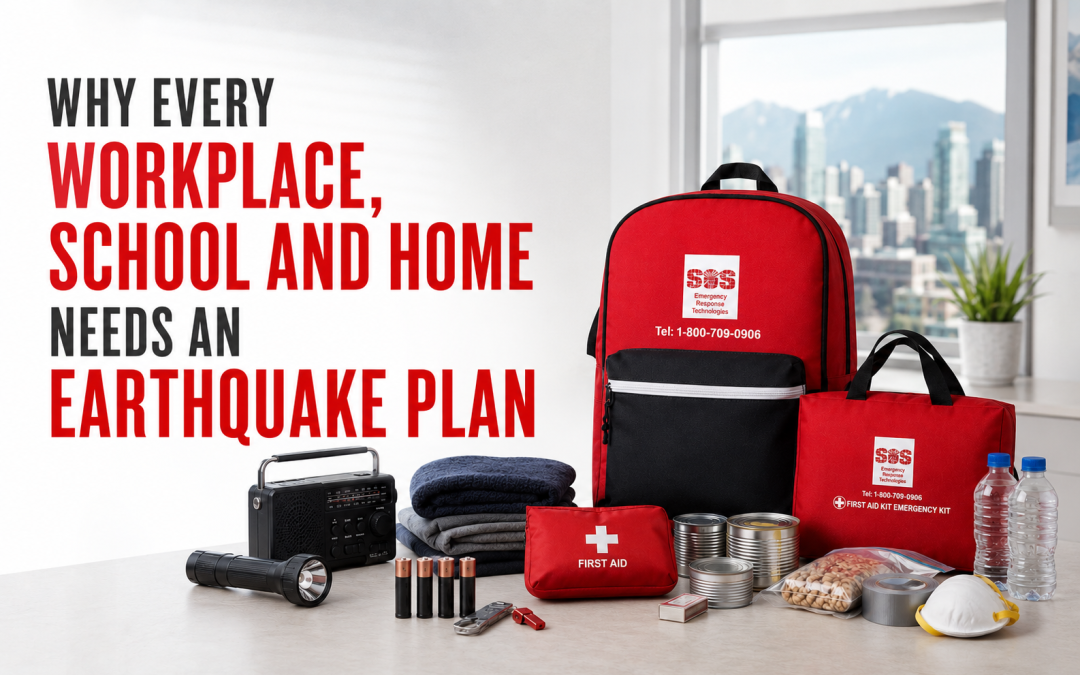
Why Every Workplace, School and Home Needs an Earthquake Plan
Earthquakes can happen without warning. When the ground begins to move, there may only be a few seconds to react and protect yourself.
The Great British Columbia ShakeOut gives workplaces, schools, families and community organizations an opportunity to practise the correct earthquake response before a real emergency occurs.
The 2026 Great British Columbia ShakeOut takes place on Thursday, October 15 at 10:15 a.m. Participants throughout the province will practise how to Drop, Cover and Hold On while reviewing the emergency plans, supplies and procedures they may need following a damaging earthquake.
Participating in the drill only takes about one minute, but the preparation behind it can make a lasting difference.
Why Earthquake Preparedness Matters in British Columbia
 British Columbia is the most seismically active region in Canada and experiences thousands of minor earthquakes each year. Although many are too small to be felt, earthquakes capable of causing structural damage remain a serious risk, particularly along the west coast. Coastal communities may also face the additional danger of a tsunami following a major undersea earthquake.
Earthquakes cannot be reliably predicted. The first warning may be an emergency alert, a loud sound or the sudden movement of the ground. Strong shaking can damage roads, interrupt utilities, disrupt communications and make it difficult for emergency responders to reach every affected location immediately.
An emergency plan helps people understand what to do, where to go, how to communicate and who is responsible for critical tasks.
What Is the Great British Columbia ShakeOut?
The Great British Columbia ShakeOut is an annual earthquake drill organized by the British Columbia Earthquake Alliance.
The drill teaches participants to:
- Drop to their hands and knees before the shaking knocks them down.
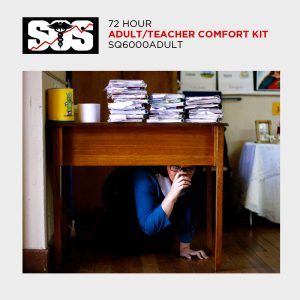
- Cover their head and neck and, when possible, take shelter under a sturdy desk or table.
- Hold On to the shelter until the shaking stops.People inside a building should not run outdoors during the shaking. Moving through a building can increase the risk of being injured by falling glass, furniture, fixtures or other debris. Doorways are also not considered safer than other areas in most modern buildings.
The purpose of ShakeOutBC extends beyond practising these three actions. Participants are encouraged to inspect their surroundings, secure potential hazards, review emergency procedures and confirm that their supplies are complete and accessible.
Why Every Workplace Should Have an Earthquake Plan
A workplace emergency plan creates a clear and organized response when employees may be under significant stress.
WorkSafeBC advises employers to assess the emergencies most likely to affect their workplace and prepare workers to respond. An effective workplace emergency plan should identify hazards, establish procedures and clarify responsibilities before an emergency happens.
A workplace earthquake plan should address:
- How employees will receive emergency instructions
- Safe areas where workers can Drop, Cover and Hold On
- Procedures for accounting for employees and visitors
- Designated assembly locations
- First aid responsibilities
- Communication with remote and mobile employees
- Assistance for people with disabilities or mobility limitations
- Utility shutdown procedures, where applicable
- Alternate evacuation routes
- Emergency supplies for employees who may need to remain onsite
- Employers should also inspect shelving, cabinets, storage areas, equipment and overhead fixtures. Heavy objects and materials that could fall or move during an earthquake should be secured whenever possible.
The ShakeOut drill can be used to identify problems that may not be obvious in a written plan. Employees may discover that an assembly area is unsuitable, contact information is outdated or emergency supplies are difficult to access.
Finding these weaknesses during a drill provides an opportunity to correct them before a real emergency.
Why Schools Need to Practice Earthquake Procedures
Schools must be prepared to protect students, teachers, support staff and visitors during and after an earthquake.
Children may be frightened or confused when shaking begins. Regular drills help earthquake safety actions become familiar, reducing hesitation and helping students follow instructions.
A school earthquake plan should include:
- Age-appropriate Drop, Cover and Hold On instructions
- Classroom emergency procedures
- Student attendance and accountability systems
- Emergency contact information
- Controlled student-release procedures
- Plans for students requiring additional assistance
- Classroom grab-and-go bags
- First aid supplies and trained personnel
- Communication procedures for parents and guardians
- Alternate assembly areas if the primary location is unsafe
Schools should also make sure parents understand how students will be cared for and released following an emergency. Families should know who is authorized to pick up each child and should avoid relying entirely on mobile phone service, which may be interrupted or overloaded.
ShakeOutBC provides drill materials for schools, childcare centres, colleges and universities, including downloadable recordings, posters and school-specific planning resources.
Why Every Household Needs an Emergency Plan
Earthquake preparedness at home involves more than storing food and water.
Family members may be at work, school, daycare or another location when an earthquake happens. A household emergency plan should explain how everyone will reconnect if normal transportation and communication systems are unavailable.
Your home emergency plan should identify:
- Safe locations in every room
- A nearby meeting place
- An alternate meeting place outside the neighbourhood
- An out-of-area emergency contact
- School and childcare pickup arrangements
- Plans for pets and service animals
- Medical, mobility and accessibility requirements
- Utility shutoff locations
- Evacuation routes
- The location of emergency kits and grab-and-go bags
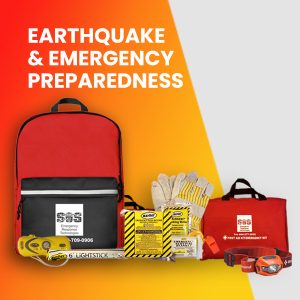
PreparedBC recommends keeping emergency supplies that can support your household for at least three days. Grab-and-go bags should also be considered for your home, workplace and vehicle. Supplies may include water, non-perishable food, medications, flashlights, batteries, a radio, first aid supplies, personal hygiene products and copies of important information.
Plans should be reviewed at least once a year and whenever there is a major change, such as moving, changing jobs, attending a new school or adding a pet to the household.
How to Participate in the 2026 Great British Columbia ShakeOut
Participating is simple and registration is free. REGISTER BY CLICKING HERE
Before October 15:
- Register your workplace, school, household or organization
- Download the ShakeOutBC drill recording in advance
- Tell employees, students or family members when the drill will happen
- Identify safe places to take cover
- Review emergency roles and communication procedures
- Inspect emergency kits and replace expired supplies
- Secure furniture, shelving and other potential hazards
At 10:15 a.m. on October 15, 2026, begin the drill and practice Drop, Cover and Hold On.
While under cover, look around and consider what could fall, break or block an exit during a real earthquake. After the simulated shaking stops, discuss what participants would do next.
Depending on the location, the exercise may also include first aid procedures, employee or student accountability and movement to a designated assembly area.
Turn the ShakeOut Drill Into a Complete Preparedness Review
The Great British Columbia ShakeOut should be treated as the beginning of an emergency-preparedness conversation rather than a once-a-year activity.
After the drill, ask:
- Did everyone know what to do?
- Were safe cover locations available?
- Could exits become blocked?
- Were emergency supplies easy to reach?
- Was everyone accounted for?
- Did the communication plan work?
- Were accessibility needs properly addressed?
- Does anyone require additional first aid or emergency-response training?
- Are supplies current, complete and appropriate for the number of people onsite?
Document the results and assign responsibility for correcting any problems. A drill becomes far more valuable when the lessons learned result in practical improvements.
Build a Safer and More Prepared Environment
Emergency preparedness cannot prevent an earthquake, but it can reduce confusion, improve response times and help protect the people who depend on your organization or household.
SOS Emergency Response Technologies helps workplaces, schools and organizations strengthen their emergency readiness with first aid supplies, emergency preparedness products, workplace safety solutions and scheduled service programs.
Use the Great British Columbia ShakeOut as an opportunity to review your emergency plan, inspect your supplies and make sure everyone knows how to respond.
Do not wait for the ground to shake before discovering that your plan is incomplete.
Frequently Asked Questions
When is the Great British Columbia ShakeOut in 2026?
The 2026 Great British Columbia ShakeOut takes place on Thursday, October 15 at 10:15 a.m. The provincewide drill is normally held on the third Thursday of October.
What should you do during an earthquake?
Immediately Drop to your hands and knees, Cover your head and neck under sturdy furniture when possible, and Hold On until the shaking stops. Do not run outside while the ground is shaking.
Can workplaces and schools participate in ShakeOutBC?
Yes. Businesses, schools, childcare centres, post-secondary institutions, families, community groups and individuals can register and participate.
What supplies should be included in an earthquake kit?
An emergency kit should include water, non-perishable food, a first aid kit, medications, flashlights, batteries, a radio, personal hygiene products and important contact information. Supplies should be customized for the people, workplace or school they are intended to support.
How often should an earthquake plan be reviewed?
Emergency plans should be reviewed at least annually and after major changes to the workplace, school or household. Conducting regular drills helps confirm whether the plan will work in a real emergency.